Q‑nomy’s Blog
Self-Service Kiosks vs Mobile Check-In: What Works Best in 2026?
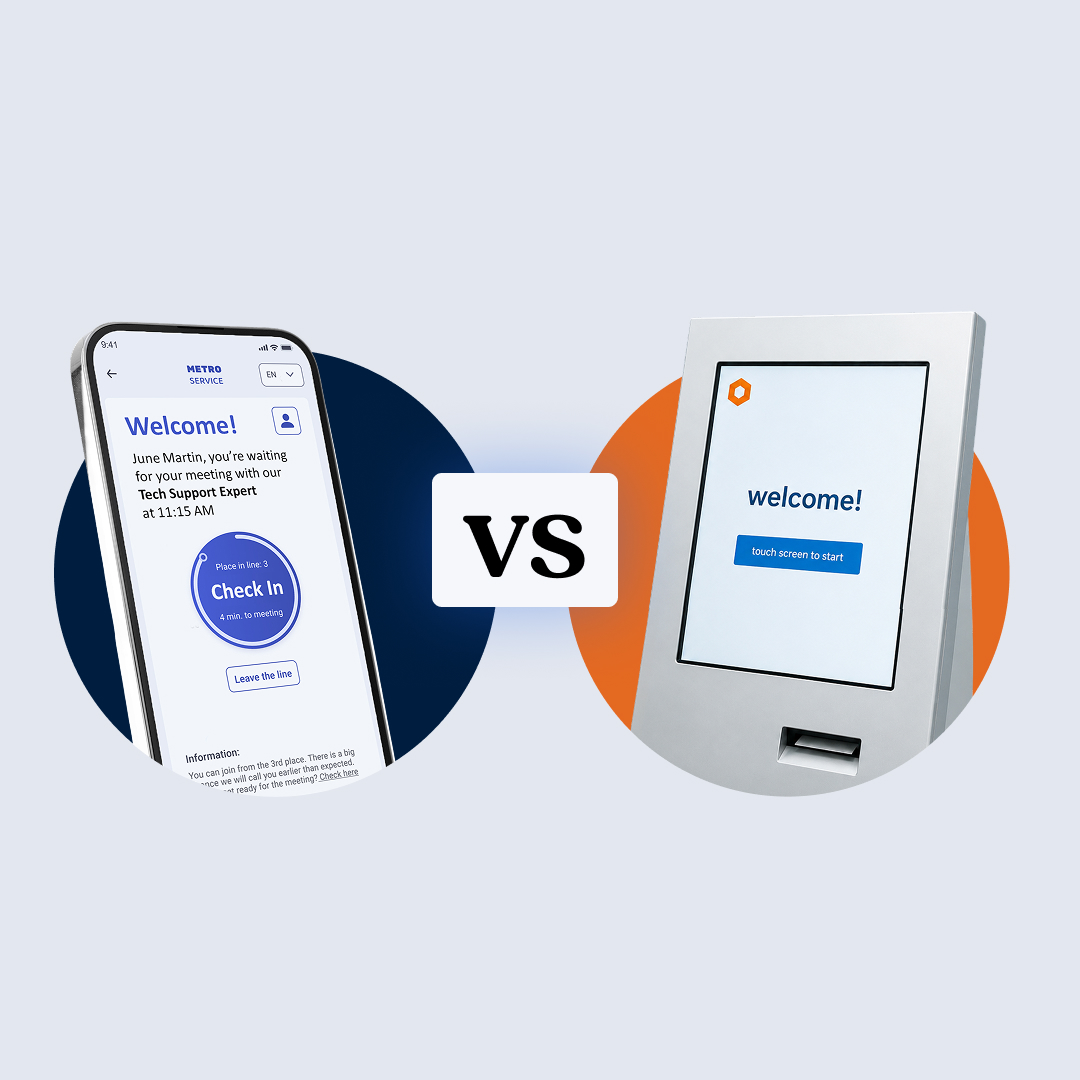
In 2026, the answer is not one or the other. The most effective approach combines both – using mobile check-in where it fits, and kiosks where they add structure, visibility, and accessibility.
For years, the discussion was framed as a replacement question. Mobile would take over, kiosks would fade. In reality, customer journeys are too varied for a single entry point. Different customers arrive with different levels of preparation, comfort with technology, and expectations from the service.
Mobile check-in works best when customers are prepared. It allows them to confirm arrival, reduce waiting time, and move through the process with minimal friction. It also has a clear operational advantage – it typically requires no on-site hardware. In some cases, even digital signage can be reduced or replaced by direct communication to the customer’s device.
At the same time, kiosks remain a critical part of the experience. They provide a visible, physical point of entry that guides customers the moment they walk in. For first-time visitors or those unsure what to do, that presence removes ambiguity. Kiosks also ensure access for all customers, regardless of device or digital readiness. In higher-volume environments, they are often paired with digital screens to manage flow and visibility – adding cost, but also reinforcing clarity and control.
The real difference is not which channel is better, but how predictable the service flow needs to be, and at what cost. Kiosks provide control and consistency at the point of entry, but require investment in hardware and infrastructure. Mobile provides convenience and lower overhead, but depends on customer behavior. Most organizations today need both.
This is where orchestration becomes essential. When kiosks and mobile operate separately, they create fragmented experiences. When managed as part of a single flow, they become interchangeable entry points into the same journey.
Q-nomy’s Q-Flow platform is built around this flexibility. Organizations can define how customers enter the journey based on real-world conditions. Some locations may rely more on mobile check-in, especially where traffic is lower or customers are familiar with the process. Others may prioritize kiosks and on-site visibility where higher traffic justifies the cost, or where a more guided intake experience is required. Built on a foundation of enterprise-grade queue management, Q-Flow combines this with capabilities such as its Virtual Lobby to support mobile-based check-in and digital waiting, allowing both approaches to coexist without changing the underlying service logic.
This flexibility means organizations are not locked into a single model. As customer behavior evolves, or as different branches serve different populations, the balance between kiosks and mobile can be adjusted without redesigning the process. The journey remains consistent, even as the entry point changes.
In 2026, the most effective service environments are not choosing between kiosks and mobile. They are balancing experience, control, and cost – using each where it delivers the most value within a coordinated customer journey.